
Train to Serve. Learn to Lead. Prepare to Conquer.
At Scholartude, we prepare the leaders of tomorrow for the National Defence Academy (NDA) with a mission-driven, result-oriented approach. Our Offline NDA Course is a dynamic blend of academic excellence, physical fitness support, and personality development — ideal for students who dream of serving the nation.
Expert Faculty for NDA Subjects
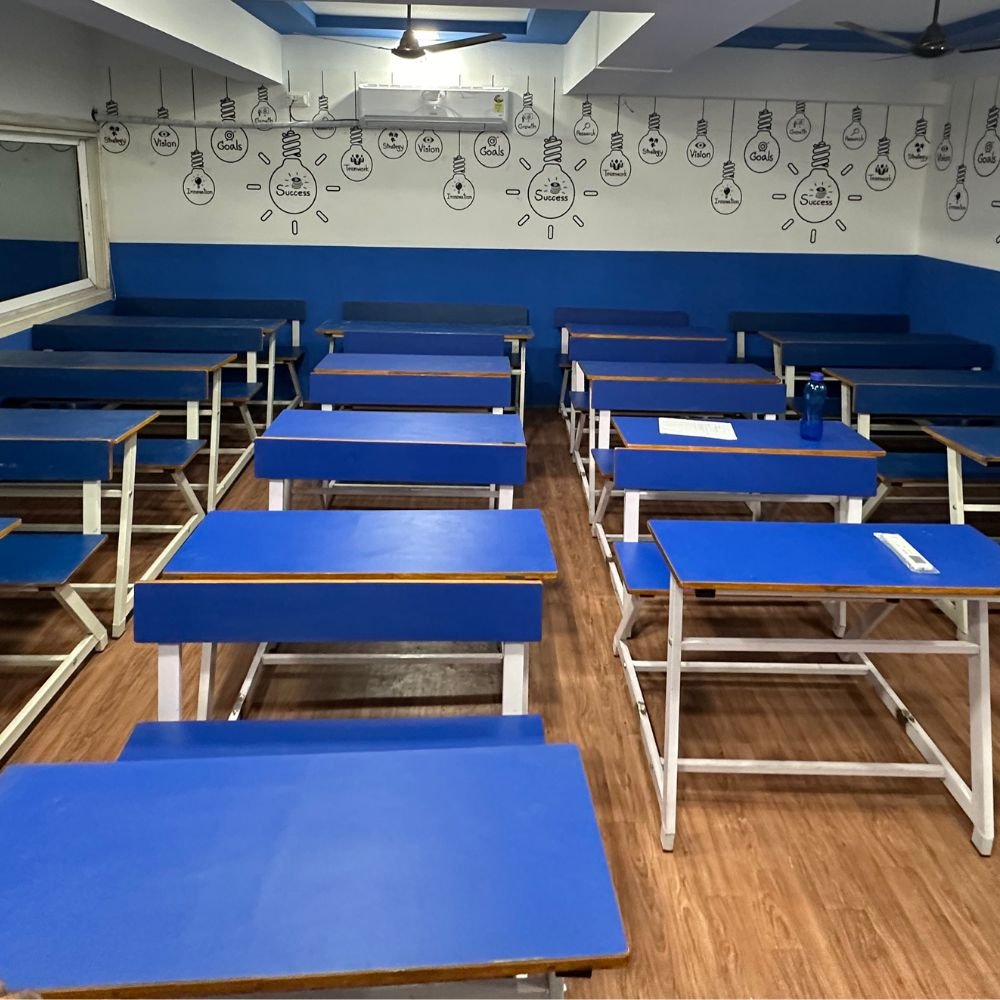
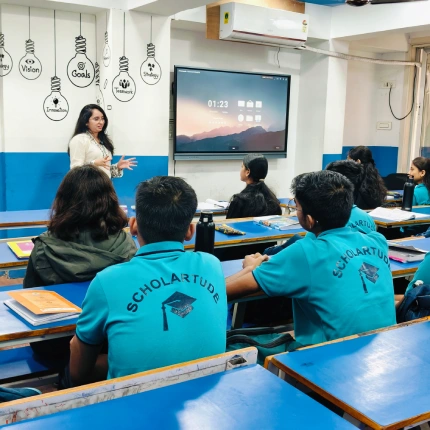
Structured Offline Classes with Military Discipline
Complete Syllabus Coverage + NCERT Mastery
AI-Based Progress Tracking
Doubt Solving & Personal Mentoring
Physical + Psychological Preparation (Optional Modules)
National Defence Academy and Naval Academy Examination
UPSC
National
Twice a Year (NDA 1 & NDA 2)
After Class 12
Unmarried candidates, Class 12 passed
Online
Offline (Pen-and-paper)
₹100 (Exempt for SC/ST, wards of JCOs/NCOs/ORs)
Mathematics & GAT

For NDA Aspirants
Faculty: Muskan Ma'am
Batch Duration: 2 Years
Time: Mon - Sat, 11.45am - 12.30pm

For NDA Aspirants
Faculty: Diksha Ma'am
Batch Duration: 2 Years
Time: Mon - Sat, 1.00pm - 1.45pm


For NDA Aspirants
Faculty: Abhishek Sir
Batch Duration: 2 Years
Time: Mon - Sat, 07.30am - 08.30am

For NDA Aspirants
Faculty: Abhas Sir
Batch Duration: 2 Years
Time: Mon - Sat, 1.45pm - 2.45pm

For NDA Aspirants
Faculty: Arjun Sir
Batch Duration: 2 Years
Time: Mon - Sat, 10.30am - 11.30am

For NDA Aspirants
Faculty: Arjun Sir
Batch Duration: 2 Years
Time: Mon - Sat, 3.00pm - 4.00pm

For NDA Aspirants
Faculty: Akshay Sir
Batch Duration: 2 Years
Time: Mon - Sat, 8.30am - 9.30am

For NDA Aspirants
Faculty: Lucky Sir
Batch Duration: 2 Years
Time: Mon - Sat, 4.00pm - 5.00pm
Whether you're in 11th or 12th, our course builds your foundation for NDA while also helping you grow into a confident future officer.


Specialized teachers for Maths, English, and GAT with NDA exam experience.

Structured schedule and code of conduct to build discipline and leadership.

Personality development, interview guidance, and group discussions for SSB.

Full syllabus mock tests and PYQ-based assessments with performance feedback.
Experience structured offline learning that promotes discipline, real-time mentorship, and all-round personality growth.
Eligibility ensures candidates meet age, education, and physical standards for defense services. Criteria for 2027 are as per UPSC guidelines.
Nationality
Age Limit
Educational Qualification
Marital Status
Physical Standards
No resignation/withdrawal from previous defense training on disciplinary grounds.
Note: Candidates debarred by Ministry of Defence are ineligible. Failed CPSS/PABT candidates eligible for Air Force ground duties.
NDA & NA exams are held twice yearly. Dates for 2027 as per UPSC calendar.
| Event | NDA I 2027 | NDA II 2027 |
|---|---|---|
| Notification Release | December 10, 2026 | May 20, 2027 |
| Application Start | December 10, 2026 | May 20, 2027 |
| Application End | December 30, 2026 | June 9, 2027 |
| Exam Date | April 12, 2027 | September 13, 2027 |
| Admit Card Release | March 2027 (tentative) | August 2027 (tentative) |
| Result Declaration | May 2027 (tentative) | October 2027 (tentative) |
| SSB Interviews | June-July 2027 | November-December 2027 |
Note: Dates liable to change. Duration: One day, two shifts (Maths: 10 AM-12:30 PM; GAT: 2 PM-4:30 PM).
The exam consists of written test (900 marks) followed by SSB interview (900 marks). Offline mode.
Written Exam Details
| Paper | Questions | Marks |
|---|---|---|
| Mathematics | 120 | 300 |
| General Ability Test (GAT) | 150 | 600 |
| Total | 270 | 900 |
GAT breakdown: English (50 questions, 200 marks), GK (100 questions, 400 marks).
Job Profile & Cadet Life
Role: Train as future officers in Army, Navy, or Air Force; lead operations, manage teams, ensure national security.
Cadet Life: Rigorous discipline, academics, physical training, leadership drills at NDA Khadakwasla (Pune). Daily routine: PT, classes, sports, parades.
Training: 3 years at NDA (joint for all services) + 1 year at service academies (IMA for Army, INA for Navy, AFA for Air Force).
Academic Degrees Offered
B.A./B.Sc./B.Tech from Jawaharlal Nehru University (JNU) upon completion of NDA training.
Post-training, commissioned as Lieutenant/Sub-Lieutenant/Flying Officer. Salary as per 7th Pay Commission.
| Rank | Pay Level | Basic Pay (₹) |
|---|---|---|
| Lieutenant | 10 | 56,100 - 1,77,500 |
| Captain | 10B | 61,300 - 1,93,900 |
| Major | 11 | 69,400 - 2,07,200 |
| Lt Colonel | 12A | 1,21,200 - 2,12,400 |
| Colonel | 13 | 1,30,600 - 2,15,900 |
| Brigadier | 13A | 1,39,600 - 2,17,600 |
| Major General | 14 | 1,44,200 - 2,18,200 |
| Lt General HAG Scale | 15 | 1,82,200 - 2,24,100 |
| Lt General HAG+ Scale | 16 | 2,05,400 - 2,24,400 |
| VCOAS/Army Cdr/Lt Gen (NFSG) | 17 | 2,25,000 (fixed) |
| COAS | 18 | 2,50,000 (fixed) |
During 3-year NDA training: ₹56,100 per month (fixed, Level 10).
Additional: Dearness Allowance, Kit Maintenance, Uniform Allowance.
Application is online only via upsconline.nic.in. No offline mode.
Step-by-Step Process
Documents Needed:
Photo (3.5x4.5 cm, 20-300 KB), signature (4-30 KB), ID proof.
Centres allotted based on preferences. Total: 41 cities.
| City | State/UT |
|---|---|
| Agartala | Tripura |
| Agra | Uttar Pradesh |
| Ahmedabad | Gujarat |
| Aizawl | Mizoram |
| Ajmer | Rajasthan |
| Bengaluru | Karnataka |
| Bhopal | Madhya Pradesh |
| Chandigarh | Chandigarh |
| Chennai | Tamil Nadu |
| Dehradun | Uttarakhand |
| Delhi | Delhi |
| Dispur | Assam |
| Gangtok | Sikkim |
| Hyderabad | Telangana |
| Imphal | Manipur |
| Itanagar | Arunachal Pradesh |
| Jaipur | Rajasthan |
| Jammu | Jammu & Kashmir |
| Jorhat | Assam |
| Kochi | Kerala |
| Kohima | Nagaland |
| Kolkata | West Bengal |
| Lucknow | Uttar Pradesh |
| Madurai | Tamil Nadu |
| Mumbai | Maharashtra |
| Nagpur | Maharashtra |
| Panaji | Goa |
| Patna | Bihar |
| Port Blair | Andaman & Nicobar |
| Prayagraj | Uttar Pradesh |
| Raipur | Chhattisgarh |
| Ranchi | Jharkhand |
| Shillong | Meghalaya |
| Shimla | Himachal Pradesh |
| Srinagar | Jammu & Kashmir |
| Thiruvananthapuram | Kerala |
| Tirupati | Andhra Pradesh |
| Udaipur | Rajasthan |
| Varanasi | Uttar Pradesh |
| Vishakhapatnam | Andhra Pradesh |
Note: Ceiling on candidates per centre (except Chennai, Dispur, Kolkata, Nagpur). No abroad centres.
Offline written exam + SSB.
Written Exam Details
| Paper | Questions | Marks |
|---|---|---|
| Mathematics | 120 | 300 |
| General Ability Test (GAT) | 150 | 600 |
| Total | 270 | 900 |
GAT: English (50 questions, 200 marks), GK (100 questions, 400 marks including Physics, Chemistry, General Science, History, Geography, Current Events).
Syllabus at Class 10-12 level.
English: Grammar, vocabulary, comprehension, cohesion.
General Knowledge:
For offline course enrollment, visit Scholartude's NDA 2027 batches.
The Scholartude NDA Course is a structured preparation program designed for students aspiring to appear for the National Defence Academy (NDA) entrance examination.
The program focuses on written examination preparation, including Mathematics, General Ability Test (GAT), English, General Knowledge, Science and Current Affairs, along with regular practice, testing, revision and academic guidance.
The course is suitable for students who are preparing for the NDA entrance examination and want structured academic guidance.
It can be suitable for:
The NDA preparation program focuses on the major areas required for the written examination.
The course is structured to cover the major academic areas required for NDA written examination preparation.
Students progressively work through concepts, practice questions, previous-year questions, revision and mock tests to build comprehensive examination readiness.
Yes. Starting NDA preparation from Class 11 can give students sufficient time to strengthen their academic fundamentals and develop consistent preparation habits.
Students can gradually build their Mathematics, English, General Knowledge and other subject preparation while continuing their school studies.
Yes. Class 12 students can prepare for NDA with a structured study plan based on their current academic level and remaining preparation time.
Preparation can focus on:
NDA Mathematics preparation focuses on building strong fundamentals followed by regular problem solving and examination-oriented practice.
The learning approach can include:
Concept → Examples → Practice → Previous-Year Questions → Tests → Analysis → Revision
The objective is to improve both mathematical understanding and question-solving speed.
The NDA program can be supported with structured academic material and practice resources covering the relevant examination subjects.
Students can use the material for concept learning, question practice, revision and test preparation.
Yes. Previous Year Questions (PYQs) can play an important role in NDA preparation.
Solving previous-year questions helps students understand question patterns, important topics, difficulty levels and examination requirements.
Regular testing is an important part of structured NDA preparation.
Tests may include:
Test performance can be analysed to identify a students strengths, weaknesses and areas that require additional preparation.
Performance analysis can help identify:
Yes. Doubt solving is an important part of the learning process.
Students can clarify doubts related to classroom concepts, assignments, practice questions and test papers.
Regular doubt clarification can help students strengthen their understanding and avoid repeating the same mistakes.
Yes. Academic mentoring can help students understand their current preparation level and identify areas that need improvement.
Mentoring can help students plan their study schedule, analyse test performance and maintain consistency throughout their NDA preparation.
Being weak in Mathematics does not mean that a student cannot improve their NDA performance.
The first step is identifying the reason, such as:
A targeted practice and revision plan can help students progressively strengthen their Mathematics preparation.
GAT preparation requires a combination of conceptual learning, reading, regular practice and awareness of important topics.
Students should regularly work on:
Regular revision and practice can help students improve retention and examination readiness.
Students should integrate NDA preparation with their regular school studies through a consistent and manageable routine.
Students should maintain:
Consistency is generally more effective than studying for extremely long hours irregularly.
Yes. Students can prepare for board examinations and NDA together with a properly planned study schedule.
Strong academic fundamentals can support both school examinations and competitive examination preparation.
The key is maintaining a balanced routine that includes syllabus completion, practice, revision and testing.
There is no single number of study hours that is ideal for every NDA aspirant.
Students should focus on:
Quality Study + Consistency + Practice + Revision + Testing + Analysis
A sustainable daily routine is generally more effective than following an unrealistic study schedule.
Current affairs form an important part of general awareness preparation for competitive examinations.
Students should regularly follow important national and international developments, defence-related developments, sports, awards, appointments, science and technology and other relevant areas.
Regular revision can help students retain important information for examination preparation.
Scholarships, if applicable, may be linked to academic performance, scholarship tests, entrance assessments or other admission criteria.
Students and parents should check the current scholarship structure with Scholartude at the time of admission.
Course fees can vary depending on the batch, course duration, admission cycle and applicable scholarship or fee benefits.
For the current fee structure, students and parents should contact the nearest Scholartude centre.
Yes. NDA preparation is not limited only to students who are already academically strong.
Students can improve their preparation with:
Consistent improvement is an important part of competitive examination preparation.
Parents can be kept informed through structured academic communication covering areas such as:
Regular communication can help parents understand the students preparation progress and provide appropriate support.
Yes. Visiting the centre can help students and parents understand the academic environment, teaching methodology, faculty interaction, batch structure and overall learning experience.
Students and parents can also discuss the course structure and preparation approach with the academic team before making an admission decision.
Students and parents can contact their nearest Scholartude centre to understand the current batch schedule, eligibility, course structure, fees, scholarship opportunities and admission process.
Scholartude — Empowering students to become Scholars.
👋 Hey there! Looking for guidance on your studies? Let's talk!
Start Chat